As a senior at Western Washington University, I took a Anthro 490 "Senior Capstone" class that basically dealt with a topic of my choosing. Of course, that topic made it's way to human rights fairly quickly.. This is a draft of course, meant for much further revision before I submit it to the Taylor/Anastasia Awards in 2008, But it's here in case there are a few interested people who'd like to learn more abou Human rights in a college classroom setting :) Enjoy.
PLEASE feel free to email with your critiques and suggestions on improvements, I know I have a "rambling" tendency in my papers :)!! Email me at Genocides.Ending@gmail.com or comment here at the bottom of the Post listing. I'm hoping to submit it in a quarter or two (assuming I have time...) to a writer's fair -- so criticize away!
Thanks- and Happy International Relations Day!!! (actually yesterday - dec 10th)
Sara Cartwright
Peace or Chimera
Sara Cartwright
Anthropology 490
Fall 2007

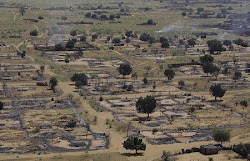
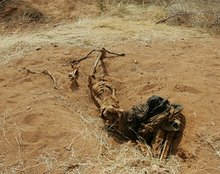
[ Photography Credits: Brian Steidle, former Marine in the US Army: Photo of Um Zeifa village, Sudan]
Studies have been conducted by groups and organizations that strive to discover what types of policies, humanitarian or international laws and doctrines have done or failed to do in regards to the plight of refugees and internationally displaced persons around the world who face little ability to participate in the conception and implementation of decisions that determine their fate and ability to exist. These studies by no means are all inclusive of how to prevent further mass atrocities in such countries, but they do provide a means to start looking for a solution to the root problem at a civilian level instead of only continuing to promote poor decisions that lead to at best, short term solutions.
The beginning of any major research project, congress resolution or policy enactment begins with an idea or topic that warrants further study. Often times, these projects and resolutions are drafted in such a manner that shows the end result of having finished the project is more important than knowing one has actually solved a problem, or come to a unique and beneficial conclusion in one’s research. This same principle applies to millions of civilians around the world living in situations that have occurred, or been allowed to continue, due to the inadequacies of the leadership. These leaders are able to change policies and resolutions because they have access to two important pieces. One, the wealth of research and knowledge needed to create solutions and two, the authority to implement these changes in a widespread and coherent manner.
Somewhere between red tape and political power, the reason for implementing these changes in the first place, to save lives, is lost. If enough pressure is put on the governments and leaders in the world, individuals can once again begin to make a difference in the conflicts around the world and with enough courage, determination and perhaps some luck, conflicts will begin to cease and the existence peace may emerge as a possibility.
INDIVIDUALS SEEKING PROGRESS
A common goal tends to be broad and all encompassing which leads to its ultimate failure. One cannot go out intending to save the world with the notion to create the illustrious “world peace” and expect such results, but rather, should narrow and specify his or her goals into a realistic scenario. The more specific the goal, the more likely it will succeed and allow the individual to continue on to another specific goal in succession to the first. The Human Rights Watch (HRW) organization is one such group that has mastered this idea. Because of their approach, they are able to dissect the many different conflicts and come out with a report that gives advice and recommendations to each government and entity involved in the conflict. They do this by painstakingly long hours in the war torn zones and refugee camps, taking individual refugee and civilian accounts of the atrocities that they personally lived through or witnessed. By taking specific accounts, the HRW then compiles the results and their reports are the culmination of such labor. The HRW has done their part, but without someone to take their work into consideration, such as our nation’s administration, then their work is without reward. The HRW cannot bring about world peace on their own, as we have discussed, it is not their intent. They simply do their work in hopes that other groups and organizations will do their respective part, such as implementing the results into educated and purpose driven resolutions, laws and policies. Other groups from there can provide security and develop ways to keep people abiding by those policies. It is my hope that this pattern, developed by small steps and organization of different groups specialties working together, that we can continue to progress until there is a worldwide turn towards creating a more peaceful and educated environment for humankind to exist. Thus, this paper is a discussion about the individual accounts and specific events that we should be more inclined to learn about as they are the first step in building a foundation that will allow world peace to exist.
Refugees and Internationally Displaced Persons
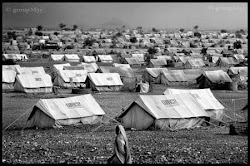
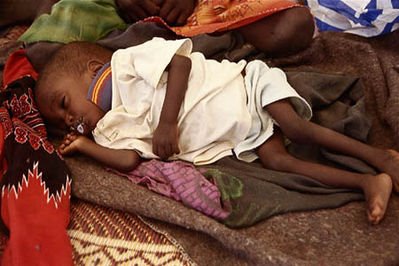
Chadian refugees have said that they would like to continue their own subsistence patterns to end their constant dependence on the government and relief systems by planting their own crops in the coming season; this was to happen in June of this year. It is true there are opposing views within these refugee camps, some refugees do not wish to do be this proactive in their own subsistence, but only because of the safety reasons and their inability to cope with another widespread destruction and misuse of their crops, lands and people. These less than willing refugees have agreed they would go if they were provided military assistance in securing their lands from the perpetrators (HRW 2007:63). The dedication shown by the people who are held up in refugee camps to continue their normal lives in the midst of a war should not be taken lightly by the government. There are several ways this could provide the foundation for an arrangement that would be beneficial to both organizations protecting the refugees or supplier of refugee camp materials and for the refugees themselves. Permitting a constructive arrangement would at the very least, be of little consequence to the government, but more likely it would be beneficial to develop trust and stability in the region and inherently less conflict.
Such an arrangement that would be beneficial to both sides might have the following components. Those refugees who want to return to grow crops and create their own subsistence should be allowed to do so benefiting the refugee camps by eliminating part of the strain on food/medical/supply needs. The refugees would benefit by having a stabile relationship with their subsistence needs and cultural patterns could return to a more desirable state amongst a growing community if more and more refugees were allowed to return to such crop lands. Most of all, it would provide a choice made on behalf of the refugee which is empowering and could provide hope for the future.
The United Nations High Commissioner for Refugees has stated this voluntary repatriation is the most ideal way for a refugee to regain his or her independence in the home country (Harrell-Bond 1989:41). I agree in finding voluntary action to be the best option for repatriation of refugees. There are downfalls and insecurities whenever repatriation occurs in a country. Giving refugees hope by returning them to a state of non-refugee status could be worse for the person if they need to reseek refugee status upon another attack from militiamen. The downfall for the refugee is the need to reestablish refugee status and losing faith in the system from which they just released themselves. It makes one wonder if they would chose the same path again given the opportunity, or reap the benefits, however slim they may be, of being in an internationally supported refugee camp. The government of the country of origin may also have their misgivings about allowing voluntary repatriated refugees back into their homelands. They may find these people too self sufficient and thus not needing the government's support and guidance which if politically motivated, could lead to an uprising against the government. In any case, repatriation is a vital step in allowing countries and their citizens to regain a sense of nationalism and work toward a state of stable, nonviolent behavior without fear of attack.
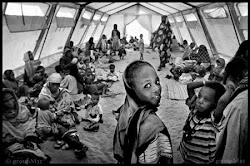
In the refugee camp of Nairobi, Kenya, there are a great number of Ethiopian refugees who have fled their home country and are now at the mercy of the Kenyan government. During an interview taken by the Human Rights Watch of more than 20 individuals who had been the victim of quite severe sexual abuse cases, only one female was granted a time and place to be examined by a medical staff member of the UNHCR. No other women and no men at all were given passes to see the medical examiner that day, an unfortunately frequent occurrence for refugees and asylum seekers who have walked hundreds of miles to receive help (HRW 2002). By seeking help, these refugees, or people seeking refugee status, asylum seekers and other victims of mass atrocities are given a sense of hope, or even a choice. They have the option of going to these havens and places of sanctuary created by the international community. Upon their arrival, they must be disappointed by the lack of organization, ultimately due to the failure of funding, but imagining the hope being ripped apart and a feeling of absolute desperation setting in is enough to destroy the will to live in any human being. These destruction of the will to live are highlighted by the HRW in numerous reports which led them to discuss the valid and urgent need for a coherent strategy to be implemented allowing the refugees to be repatriated, whether voluntary or not (HRW 2004). In time, the logistics may be worked out, the refugee will have their limited medical examinations and food/supply rations handed out, but for many, it may be too late, and for the rest, it is only enough to continue the suffering before they ultimately perish. These are the grave consequences that we should work towards eliminating if we are to pursue a long-term solution to these problems.
An organization at the Harvard Law School has taken the initiative to prepare a similar style of report as the HRW. Their organization is called the International Human Rights Clinic (IHRC) and their reports are well planned and organized, but go one step further than some of the HRW reports by adding the legal consequences of perpetrators. In one report on the humanitarian crisis in Gambela, Ethiopia, the IHRC documented for years the atrocities that were occurring to civilians and analyzed these atrocities on a level that was no less than war crimes and crimes against humanity (IHRC 2006). It is bold step in the right direction towards applying a punishment level to the perpetrators of such crimes and sends the message that not only are we as a country watching the events unfold, but we are analyzing them to seek justice in the future. The report accuse the Ethiopian National Defense Forces (ENDF) of failing to follow the Geneva convention articles among other things and details exact dates and times in which these atrocities occurred. The report is indeed effective; it is based off two years of human rights workers taking interviews with Anuak civilians who continue to live in constant fear of mass atrocities and ethnic cleansing.
Reports and documentation like the HRW and the IHRC are blunt in their language regarding human rights violations and can be so graphic at times that it does make one wonder if just reading these reports can truly give a common student or citizen the impression of what’s really happening on the front lines today. They do serve a purpose, however, and that purpose is gravely underestimated by the congress and the governments who fail to use them as adequate resources. It is again, up to the citizen, to take advantage of these reports and continue to pressure their governments with the facts and data gained by reading such a wealth of information.
The Contribution of Media & Celebrities
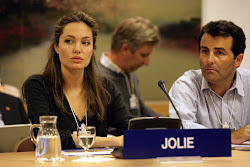
Some individuals have the unique opportunity to express their ability in a largely public manner that helps to attract attention to humanitarian aid work and peace negotiations. Among these people that have gained a widely known background in humanitarian aid, began their lives very differently, but have taken their publicity and status to promote their respective operations. This group of people include some of the most famous celebrities like Angelina Jolie, Brad Pitt and George Clooney of the movie industry, Bob Dylan, Bono, and Ringo Starr of the music industry and some of the more brave individuals have gone so far as to use their experiences as victims to provoke awareness such as Mayen Koul and John Dau of the Lost Boys and Ishmael Beah, once a child solider from Sierra Leone. These individuals have all used their ability to promote awareness by giving the otherwise, unknown citizen, a taste of the realities that exist outside our borders. And then there are those who have made the ultimate sacrifice in bringing awareness to their causes. Wall Street Journalist, Daniel Pearl, lost his life in rebel hands while researching for a story in Pakistan around February 2002. His wife, Mariane Pearl, explains how Daniel spent his entire life researching stories and felt as those they, together, were global travelers who needn’t worry about borders, only the stories within them, to capture them with pen and paper and publish them for the entire world to experience (Pearl 2002). These individuals take on a great responsibility when they promote awareness, but they do so because it is simply the most important part to gaining a true perspective of the conflicts today. These individuals seek out the victims of conflicts and truly gain a new perspective.
John Prendergast, with the help of several other individuals has helped found a project known as the ENOUGH project that is designed to give extremely specific advice in the form of procedures and methods to the governments and organizations responsible for organization peace talks and negotiations. With the help of Don Cheadle, an actor who played Paul Rusesabagina, a hotel employee during the 1994 Rwanda genocide, in the movie, Hotel Rwanda. With the help of Don and Paul, John was able to continue his lifestyle which has been a rollercoaster of travels to seek out his own first hand experiences in refugee camps and war zones. No one says this work isn’t without its dangers, but it necessary and John knows this better than most, in order to truly understand the root of the conflicts that result is such horrible tragedies. In response to the recently failed Sirte peace negotiations, John Prendergast and Colin Thomas-Jensen came out with a strategy paper that outlines very specifically what things need to be addressed in the upcoming reconvening of the Sirte talks. In the introduction of the strategy paper, John writes:
“These lessons – clear end state, tight structure and focused leverage – have not yet been applied to the Sirte talk. A clear strategy for success should reflect the lessons learned from the success of the CPA1, and failure of the DPA2, and include new arrangements and approaches on the content, process, and leverage that guide the talks” (Prendergast 2007).
John then continues in detail to list specific recommendations for each approach and suggests that there is still hope in the peace talks if one simply takes the time to understand the complexity of the situation being dealt with.
There are hundreds of examples of other individuals who have taken their specific topic of choice and made it as public as possible because of their status in the mainstream media. These people continue to prove worthwhile for the efforts they bring usually end in a great deal of fundraising events which help build their organizations. Examples range from individuals creating hugely successful fundraising events to individuals going to the front lines and building educational facilities or helping to build mud homes for makeshift communities of refugees. Oprah, once only a daytime talk-show host, now, a well-known activist who helped use her financial success to build a school for girls in South Africa and Angelina Jolie has been known to do many projects like helping finance and participate with hands-on projects that directly relate to the civilians who are most directly affected by genocide.
CONSEQUENCES & RESPONSIBILITIES
Policies and management plans enacted by organizations that have taken it upon themselves to be the front line defense system for refugees, need to be assessed on their ability to accomplish their goals. Because the nature of their work has consequences of life or death, their failure to uphold the policies and promises of their organization lead to the deconstruction of any solutions they may have been working towards. The results of this inadequacy lead to unbelievably high death rates, human rights abuses and a place for mass atrocities to flourish. There are cases of clear failure of the UNHCR to keep their international offices kept in working condition and able to supply the proper care in dealing with refugees that have sought their help. Some of these refugees have walked across countries, survived sexual abuses over periods of decades, or been eye witnesses to mass atrocities only to be turned away for medical treatment because they are unable to produce the necessary paperwork showing they are of certified refugee status. If these companies are going to protect our people, they need the help and backing of the government and though they are considered non-governmental organizations, they are failing due to lack of funding.
The governments must be all too aware of this kind of situation as it happens repeatedly across the globe in every major crisis. It would see that providing additional help and support in the same areas would allow the humanitarian aid organizations to do their job more effectively without breaking the NGO status regulations. For example, in the case of a Nairobi, Kenya refugee camp, only one out of the twenty sexual abuse victims that arrived one day were admitted into the camp and allowed to be treated by medical and psychological staff members (HRW 2002). Had a government organization prorated funds to set up a waiting station for all the incoming refugees, IDP’s and other individuals needing assistance, the less strain could have been put on the UNHCR directly and more people may have been helped. Unfortunately, it seems as though these simple to implement situations are usually the last to arrive to any given situation.
FAILURES OF INADEQUACY
Failure of the United Nations
One type of catastrophic event in the humanitarian arena is one where attending peace talks gives more advantage to the rebel groups responsible for needing the peace talks in the first place. For example, in October 2007, the Sirte Talks began in Libya and were to discuss peace talks for the Darfur region in Sudan. The results could have played out significantly different had a proper analysis been taken into account by the UN General Secretary, Ban Ki-moon, but as usual, improper preparation and lack of paying attention to the experts who know the region caused a significant part in the talks failure. Eric Reeves, a well trusted and respected advocate for the Darfur conflict in Sudan, labeled this situation as the “most disturbing consequence of the collapse of the Sirte talks” (Reeves 2007). Had the people responsible for organizing this meeting spent more time looking into the details such as placement of the talks, then maybe a permanent solution to the Darfur conflict could have had its beginnings. It may not have, but more than likely, peace talks would have promoted the idea that peace is again a possibility for the region. Ban Ki-moon was requested by his counsel to not have a set of peace talks in Libya and also may have been warned against the use of dirty mediators a.k.a. mediators who have a personal influence towards one side or another. Unfortunately, not only did the resulting talks end poorly for the Darfurians and other attendants, (or lack of rebel attendants due to circumstances) it actually helped solidify the ongoing attention and celebrity status of the Khartoum regime (Reeves 2007).
The United Nations certainly has a way with words. Their discussions are eloquent and well stated for the record, but unfortunately for the people of the world, their actions simply do not follow in the same manner. The United Nations, though founded on the principle that it would perform much better than the organization it replaced, the League of Nations, has found itself in a position of being considered the same, if not worse than its predecessor. In fact, worse, the infighting and political maneuvering of certain countries behind the scenes of the United Nations council are designed to inhibit the ability of the P-5 from stopping such action like genocide. The United Nations has come to a point where it is actually helping to allow countries to continue unscathed, their campaigns of ethnic cleansing and mass atrocities, including induced famine, militia attacks on villages for only the sake of killing (LeBor 2006). Though the League of Nations was not able to end World War II, the United Nations has failed in many more numerous ways. Sebrenica and the Rwanda genocides of the twentieth century prove that failure yet again. Military leaders from the world’s most powerful governments cannot live up to their promises and deliver the citizens of 3rd world countries from evil. It is doubtful, but perhaps if it were made mandatory to read every report from the HRW regarding the country they plan to help rid of mass atrocities, they might prove more useful.
Past Examples of Failures
Because of the way our nation elects the governmental leaders, the change in policy can drastically change every 4 to 12 years. During some of these years, we see a trend of decisions made by the associated leader that leads to significant improvement of foreign policy and foreign relations as well as the improvements of peace efforts between countries that we have taken an interest in. As with every positive decision and trend, there is a complementing negative side that often reveals itself in catastrophic events. These events may neither be wildly active nor portrayed in the media’s attention, but they provide the foundation for the trend of decisions that can be made by influential country leaders where a refugee’s livelihood depends on these decisions. Unfortunately the current Bush administration has proceeded on several occasions to take a “strategic withdrawal and ignore” stance when attempting to mitigate escalating situations pertaining to failed foreign diplomacy.
The Bush Administration has its disagreements on how to handle the Iraqi occupation and the response to that disagreement was to disallow any “prominent Americans” from visiting or making contact with the Syrian government and its president, Bashar Assad. Former U.S. President Jimmy Carter was made aware of this situation and instead of backing down from his request to see the Bashar, he offered his assistance in opening up dialogue to perhaps mediate the situation. As a former president and advocate for foreign relations, Carter has known Bashar for many years and though they didn’t always agree, their relationship was never strained the point of ceases contact with one another. The United States under the Bush Administration decided to solve the problem of having a simple disagreement with the Syrian government and its president disregarding Former President Carter’s potentially significant offer towards mediating foreign relations (Carter 2006:81-82). This is a complete disgrace as it utterly disregards the many resources of conflict mediation to resolve disagreements and works towards a path that would better suit both parties. The consequences of such a reaction to a minor disagreement could be to potentially lose an ally in regards to the Iraqi occupation, create long-lasting grudges and could alter other government’s views on our ability to end the occupation which significantly alter the outcome of the Iraqi war.
It is said that Iran may never have actively fought on the offensive side of a conflict, but one of Mark Kurlansky’s “25 Lessons” could be changed ever so slightly to describe the reasoning for no outwardly offensive maneuvers. It is the lesson that the “Nations that build military forces as deterrents will eventually use them” (Kurlansky, 2007:183). If we change the wording to state that nations who build military forces as deterrents will eventually use them in such ways that are not always seen on the public front,” then we could accurately describe some of Iran’s political and military motivated maneuvers. To illustrate this matter, we must look to individual descriptions of situations that occur on a daily life level from those who were directly affected by the military’s offensive efforts. One man, an uncle of Lord Bushir Khan, a Beg3 family owner of a once wealthy castle, describes the part of the wartime presence that led to the downfall of his family in the village of Sang-i-zard, Afghanistan. He lives in the castle and told the story of how the Iranians gave arms to an opposing side, the Mullah4, who then decimated and forced the Begs to live in a nearly impoverished state of being (Stewart 2004:201). Had Iran not interfered, the outcome would have likely altered significantly in favor of the Beg’s family. It is these types of stories, told to travelers who take the time to listen and participate in simple “guest to host” conversations, show how the real outcome of such events - such as Iran’s military not actually going to war with the Begs, but how their support by giving arms to the Mullah determined the fate of the Begs – can significantly differ from the media’s version of the story. It is these stories from independent and non-corporation affiliated individuals that are providing the much needed information to the leaders around the world who are able to construct new policies that would dictate how we conduct relations with such countries like Iran and others like it.
LEARNING FROM OUR MISTAKES
The reason behind looking at these specific incidents is to show how time and time again, governments and leaders around the world fail to learn from previous war time incidents that have without doubt not worked out to their benefit. Whether the intentions were to benefit the people or an individual’s strive for power, mistakes were made and yet we continue to make the same mistakes today. I find this significant for numerous reasons. We’re taught from a young age that you must learn from your mistakes to grow up and be an “adult.” The better half of society is generally considered those people who have overcome obstacles and “tried tried and tried again” until they accomplished whatever it was they were intending to do, usually by adjusting small details in their plan until they found the perfect way to complete their goal. But the most interesting part about the failure of people to learn from their mistakes is the fact that the media will spend the most time dissecting the poor decisions and significant errors. Human error is interesting, and the media will do anything they can to attack another side if it promotes their topic and creates interest in their newscasts. The media is the most influential part in public opinion; therefore, it is truly amazing to see leaders who constantly strive for better public image polls by simply taking advantage of the vast resources available to them in order to make more educated and learned decisions.
In 2006 alone, there were 117 reports published by the Human Rights Watch organization. These reports all contain individual interviews with refugees who live in camps, internationally displaced persons who cannot return to their homes due to any number of situations and many other civilians who have had to witness or personally experience the mass atrocities and genocidal actions that ravage almost every continent on our planet. In every single one of these reports, there are clear instructions to specific entities on the steps they need to take in order to eliminate the causes of violence that prompt international attention. The annual year-end report also published by the Human Rights Watch allow for all of the events of 2006, with references to the 117 reports, to be available with clear, concise information that is vital towards our understanding of potential peace negotiations. Regrettably, in letters to both Patty Murray and Maria Cantwell, senators from Washington State, their personal response to my request for information regarding these reports and what more they can do to promote peace in the Darfur conflict resulted in nothing more than a list of resolutions that only promoted humanitarian aid assistance (letter to Patty Murray, May 11th, 2007 and Maria Cantwell, April 18th, 2007). Though encouraged that several initiatives were being presented by our congressmen and women to help humanitarian aid programs financially, none of those initiatives involved any well planned steps such as those provided by the Human Rights Watch.
The first step towards providing a better solution to issues, such as the Iran situation discussed above, could be to analyze our current relations with the given country and to not only discuss the possibility, but begin divestment until further research can determine the true nature of the country’s motives in regards to foreign policy. That research must begin with utilizing the wealth of knowledge collected by individual travelers who speak the languages of places they visit like Rory Stewart, photojournalists like Brian Steidle of the USHMM, columnists like Nicholas D. Kristof of the NY Times, and other non-corporate affiliated researchers. All of these men have one thing common: their passion for the truth which they will stop at nothing to obtain first hand and publicize it to anyone who will listen. After taking away one’s support by means of economic sanctions or divestment that will ultimately lead to their inability to support other foreign regimes, governments and terrorist organizations, we can begin to take the painstakingly long hours to review the civilian individuals’ accounts of the aftermath of past and current war time situations. The length of time it would take to have a few good teams researching and identifying what strategies have worked, what has not or what approaches work best for particular foreign leaders would be much more beneficial in the long run than taking our “best stab” at seeing how well we can manipulate treaty negotiations and foreign policies to work in our best interest. As many of the Human Rights Watch reports state, the world’s most dire situations have not improved and thus there cannot be improvement in our economic relationship with these countries. I would find that by taking advantage of already collected information would be the only logical place to start to improve those relationships.
A CHANGE IN LEADERSHIP & NEW BEGINNINGS
The can be no panacea to the all the wrongs that plague humankind, in fact, that may prove to be worse than our current situation, but there is something to be said for at least taking a look towards common sense solutions. A third, outside perspective on the way human rights issues are currently being handled is a possible way to start over. Solving the world’s most heinous crimes are going to have to begin with the people who have the authority to overhaul the governmental systems. That generally points to the current leaders of the world such as the P-5 group of country leaders in the United Nations. At some point, they will have to step back and realize we have managed to maneuver ourselves into such a disastrous downward spiral that our only option will be to start over from the beginning. And look at the individuals, the specific incidents occurring and build up a new foundation and process to deal with mass atrocities and genocide. Only then will economic systems and world cultures truly benefit from movements and organizations that promote the safety and welfare of all humankind.
The world is crying out for help and there are so many people who are presenting the situations “as is” to the governments. London protestors wear blindfolds at rallies to signify what they believe their government is doing: Nothing (BBC 2007). Women for Peace show demonstrations on their website of how waterboarding is a severe method of torture approved and used by the United States military (Codepink 2007). There are thousands of examples of grass roots organizations who listen to the facts, read reports like the Human Rights Watch and listen to the real experts like Brian Steidle, John Prendergast, Rory Stewart and Eric Reeves. What we can’t understand is why our governments continue to not act on the information so blatantly placed in front of them. As an activist, the actions of our government are simply not good enough. They don’t listen and expect results, they rely on their faith, yet they alone hold the power to change the system in a timely manner and until they learn from their mistakes, we will continue to live in a world dominated by the actions of a few. With negative atmosphere surrounding our foreign policies and reports of human rights abuses becoming more and more frequent, there is still hope. The people of this country are starting to listen and pay attention to a far greater extent than in previous decades and their actions are resulting in significant changes to the elected leaders in Congress and in the white house. Our elected leaders are being pressured to uphold their values and promises and those that do not live up to the hopes of the people are voted out of office and other individuals are being given the opportunity to show their strengths in changing policies. We just may survive to see peace exist in reality and not just a figment of our vast imaginations.
FOOTNOTES:
1. CPA: The Comprehensive Peace Agreement.
2. DPA: The Darfur Peace Agreement of 2006.
3. Beg: Leaders of the Blackfoot Tribe of the Hazara people in Afghanistan supposedly descended from Muhammad Ali of Sang-i-zard. One of four major family lineages in the area (Stewart 2004:200).
4. Mullahs: an Islamic word describing a trained person in the ways of Islamic law and traditions, usually a Shi’a cleric of Muslim origin, but recently has been used by non-Islamic Clerics to describe an opposing Islamic party in a derogatory manner (Wikipedia 2007).
REFERENCES:
British Broadcasting Corporation (BBC)
2007 News in Pictures. Electronic document, http://news.bbc.co.uk/1/hi/in_pictures/6997702.stm, accessed December 1, 2007.
Carter, Jimmy
2006 Palestine Peace Not Apartheid. New York: Simon & Schuster, Inc.
Codepink.
2007 Codepink. Electronic document,
http://www.youtube.com/watch?v=GlLfRCkZuxQ, accessed December 1, 2007.
Harrell-Bond, Barbara E.
1989 A Symposium: Refugees in Africa-The Dynamics of Displacement and Repatriation: Under What Conditions Is It the Most Desirable Solution for Refugees? An Agenda for Research. African Studies Review 32(1):41-69.
Harvard Law School
2006 We Are Now Hoping for Death: Grave human rights abuses in Gambela,
Ethiopia. The International Human Rights Clinic (IHRC).
Human Rights Watch
2007 They Came Here to Kill Us: Militia Attacks and Ethnic Targeting of
Civilians in Eastern Chad, vol. 19 No. 1(A) pp. 63-64: Human Rights Watch Report.
Human Rights Watch
2002 Hidden in Plain View: Refugees Living Without Protection in Nairobi and Kampala, Human Rights Watch Report.
Human Rights Watch
2004 If We Return, We Will be Killed: Consolidation of Ethnic Cleansing in Darfur, Sudan.
Kurlansky, Mark
2006 Nonviolence. New York: Random House, Inc.
LeBor, Adam
2006 Complicity with Evil: The United Nation in the age of modern genocide. Harrisburg, Virginia: R.R. Donnelley.
Pearl, Mariane and Pearl, Daniel
2002 Foreword. In At Home in the World: Collected Writings from the Wall Street Journal. Helene Cooper, ed. Pp. xiii-xv. New York: Simon & Schuster, Inc.
Prendergast, John and Thomas-Jensen, Colin
2007 A Strategy for Success in Sirte. ENOUGH Strategy Paper #10.
Reeves, Eric
2007 Darfur Peace Talks in Libya Produce only an Emboldened Khartoum. Electronic document, http://www.sudanreeves.org/Article192.html, accessed November 28, 2007.
Stewart, Rory
2004 The Places In Between. London: Picador.
Wikipedia
2007 Mullah. Electronic document, http://en.wikipedia.org/wiki/Mullah, accessed November 15, 2007.